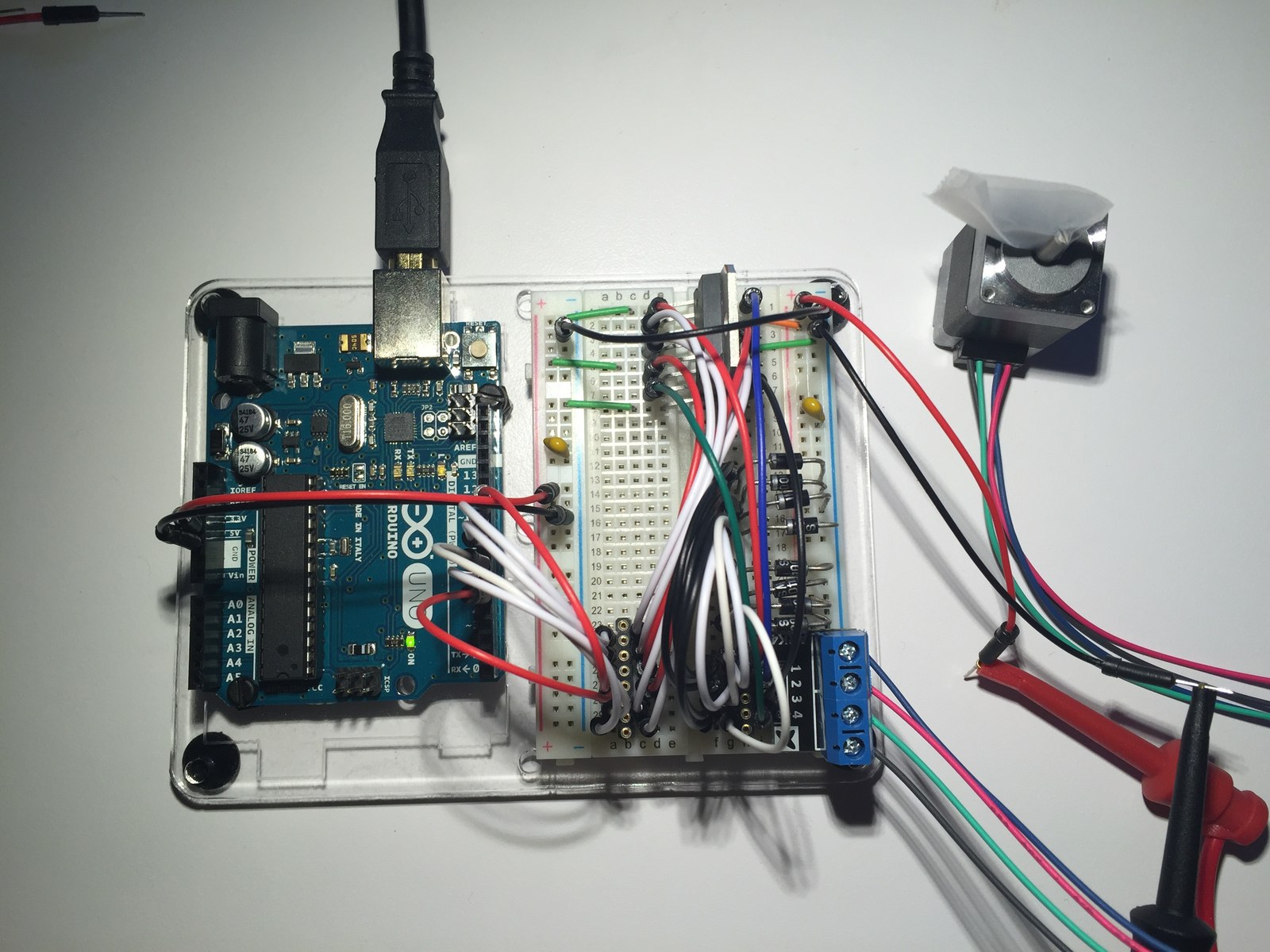
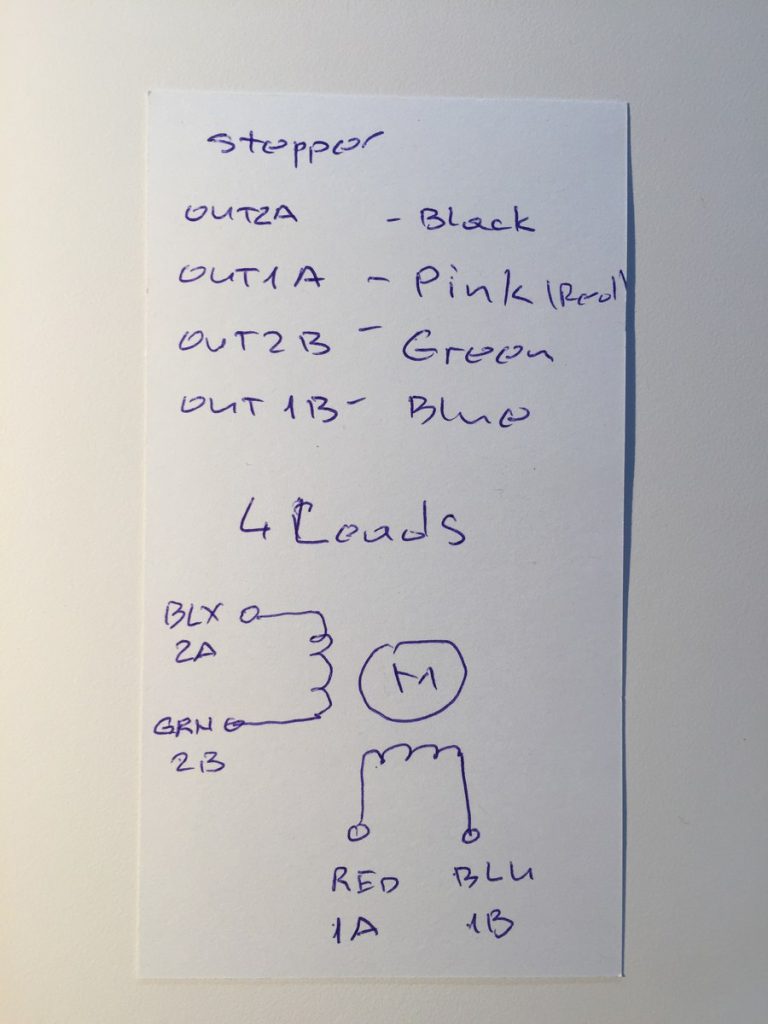
The L298N project demonstrates a stepper sequence implemented directly in Arduino code. It includes a custom StepperL298N class, motor winding references and photographs of the driver and motor on the bench.
How the project works
The class stores full-step and half-step transition tables. Each call to step selects the next four-output state, with direction determined by which half of the table entry is used. The active loop selects full stepping, performs 200 steps with a 10 ms delay between steps, disables both bridges and waits one second.
The motor object is constructed with pins 6, 7, 8 and 9. Enable outputs on pins 10 and 5 control the two bridge channels. Several alternative movement sequences remain commented out and do not run in the saved version.
Hardware and configuration
| Item | In the supplied code |
|---|---|
| Bridge control | D6, D7, D8, D9 |
| Enable signals | D10 and D5 |
| Active mode | Full step |
| Active sequence | 200 steps, then a one-second pause |
Working with the supplied code
Match the coil pairs to the driver outputs and use the motor datasheet to select a suitable supply and current arrangement. The generic wiring diagrams in the folder should be checked against the actual pin order in this sketch.
Review the two memset calls before extending the lookup tables: their value and length arguments are reversed, making the requested length zero. Correct initialization matters if new states or modes are added. The program illustrates sequencing, not acceleration planning or closed-loop position verification.
Video demonstration
Source code and project files
Browse this project on GitHub. The files below are useful starting points for the sketches and references discussed in this post.
Download the used libraries (ZIP, 14.7 MB).
These notes describe the archived source and project media. The sketches have not been rebuilt or tested on hardware for this article.